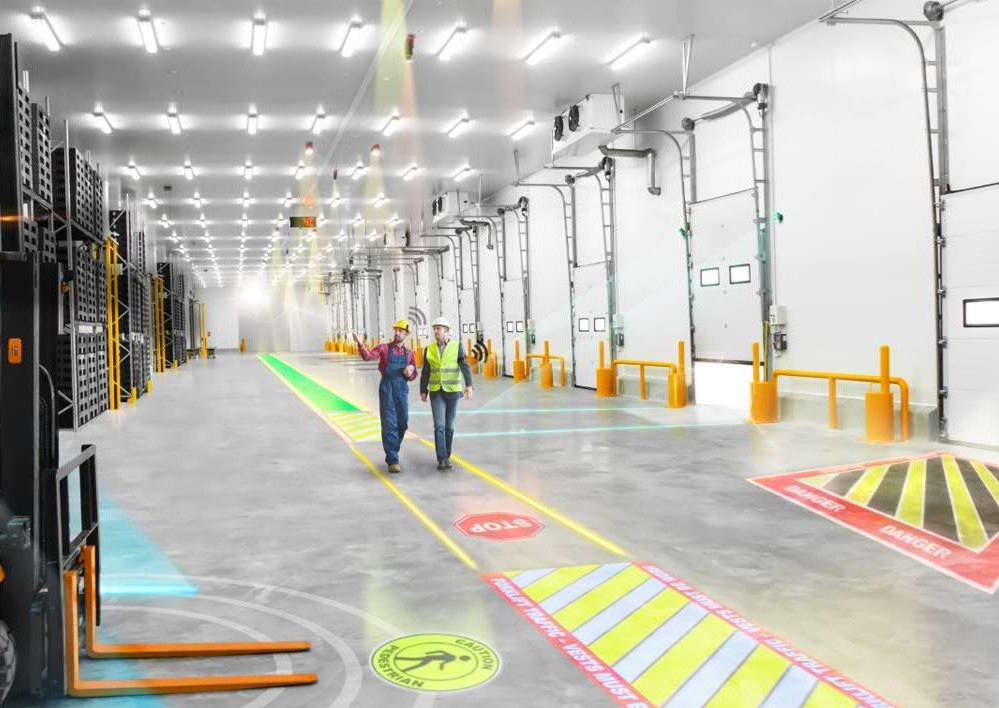
The versatility of LED projection extends to different substrates and environments, making it a valuable tool for diverse applications in industries such as logistics, manufacturing, and retail. It is important to consider environmental conditions and lighting when planning LED projection projects to achieve optimal results.
LED projection is suitable for a wide range of substrates, ranging from tiles and concrete to asphalt and more. The technology is highly flexible and adapts to different substrates.
- Tiles and concrete
LED projection can easily be applied to tile floors and concrete surfaces in factories and warehouses, for example. - Asphalt
In logistics centers with outdoor areas, LED projection can be used on asphalt to mark traffic routes. - Wooden floors
For applications in commercial spaces with wooden floors, such as stores and showrooms. - Industrial carpets
In some industrial environments with carpets, LED projection can be used to display markings. - Specific surface treatments
LED projection is flexible enough to work on surfaces with special treatments, such as non-slip coatings.
Note: Outdoor use in sunlight
However, it is important to note that outdoor LED projection is not always equally effective, especially in bright sunlight. The visibility of projected markings can be reduced by direct sunlight during the day. Therefore, LED projection is usually best used indoors or at night, where the projections remain bright and highly visible.